
"domestic coffee consumption"
800 article(s) found

Foreign coffee brand China Enclosure Silicon Valley newcomer Wheelys wants to challenge Starbucks
Compared with the global average growth rate of 2%, China's coffee consumption is growing in double digits, and the huge market prospect has attracted the covet of many foreign brands. According to local media in Shanghai, Wheelys, a coffee brand from Sweden with the Silicon Valley incubation label, has announced plans to expand in the domestic market and intends to set up an industrial fund to promote the development of city operators.

Foreign coffee brand China "enclosed land" Silicon Valley newcomers want to challenge Starbucks?
Compared with the global average growth rate of 2%, China's coffee consumption is growing in double digits, and the huge market prospect has attracted the covet of many foreign brands. According to local media in Shanghai, Wheelys, a coffee brand from Sweden with the Silicon Valley incubation label, has announced plans to expand in the domestic market and intends to set up an industrial fund to promote the development of city operators.

Why did Starbucks Coffee come to China? China's coffee industry is still in the climbing stage
The International Coffee Show closed Sunday at the International Exhibition Center. In the dense fragrance, visitors are bustling, the scene is very hot. However, the surface noise can not hide the embarrassment of the domestic coffee market, the reporter visited found that the popular coffee brands are mostly foreign guests, China has not appeared in the international famous big brand coffee manufacturers and chain stores. Industry insiders say that because

China has become the main force in the coffee market
With the process of China's reform and opening up, Western culture, represented by coffee, continues to infiltrate in domestic cities with the rapid growth of the middle class, with the improvement of the quality of life and the acceleration of tempo. More and more Chinese people accept and like coffee as an elegant, fashionable and romantic way of leisure and art of life. Data from Beijing International Coffee Industry Association and China International Trade Center

In order to seize the coffee market, add Rosa cake and hold hands with 90 + coffee.
(Odd-Steinar Tllefsen, the 2015 world champion of hand coffee, shares his experience on hand coffee.) Coffee lovers at the scene participate in the 90 plus coffee cup test.) Red net Changsha, August 3 (moment journalist Xiang Wan) as a new force in the Changsha coffee market, Rosa cake shows a strong momentum, no less than wheat coffee, following the launch of a cup of hand coffee, and then with the top coffee series

The annual market growth rate of China's coffee industry is more than 10%.
Tea, coffee and cocoa are called the three major drinks in the world. In recent years, with the improvement of domestic economic level and the change of people's way of life and work, the market prospect of coffee is getting better and better. Coffee beans play a very important role in both private and business occasions.

Coffee common sense how far is China from a big coffee consumer?
In Fushan, a small town in the western corner of Hainan, fragrant cafes are full all the year round, and local residents consume more than 200 cups of coffee per capita each year. This astonishing consumption impressed coffee suppliers from all over the world who came here to participate in the International barista Championship. Chinese people began to be interested in coffee culture, which made me see the huge market potential. Ethiopian federal democracy
The soul maker of coffee, the barista.
Baristas refer to professional coffee-making service personnel who are familiar with coffee culture, production methods and skills. Since about 1990, the English word Barista has been used to refer to an expert in the production of espresso (Espresso)-related drinks. Italian Barista, corresponding to English bartender (bartender); singular and bisexual; plural positive baristi, plural negative bariste. Chinese
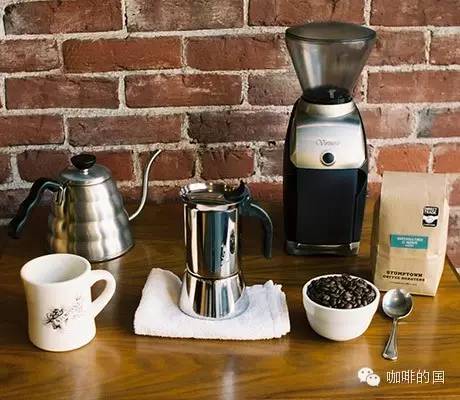
The Type of Bean Mill how to choose the Bean Mill
Introduction to coffee knowledge part 1: know the bean grinder with the domestic expansion of Starbucks, COSTA and other fast-vanishing coffee chains. Let more and more Chinese people slowly change the imported drink of coffee from fashion consumption to living habits. Driven by a small number of domestic boutique coffee shops and roasters. More and more coffee drinkers are beginning to find out that Starbucks and COSTA are like this.

How big is the market for cafes? Express Hotel should also be involved in 7 days.
Guide to Ka Xiang: in the increasingly mature domestic coffee market, all enterprises want to get involved in the coffee industry and get a piece of the pie. Watching the coffee accompany you and finally withdraw quickly because of mismanagement, why do entrepreneurs still go to this circle? Let's see what the chairman of Express Hotel says. As Platinum Tao Group, which has the largest number of hotel brands in China and focuses on experiencing consumer innovation, it began in October last year.

A brief introduction to the cultivation of Costa Rican Yerzaro Coffee, Geographic location, Climate and altitude
All the coffee trees planted in Costa Rica are Arabica coffee trees. through improvement, the quality of coffee beans is better and more stable. in order to facilitate picking, coffee trees are kept at a height of about 2 meters through continuous pruning. The coffee that people eat is the taste of the seeds in the fruit that are brewed in water. After picking raw coffee beans, the peel, pulp, seed film and sun exposure must be removed.
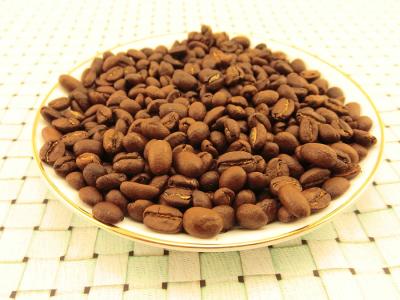
Using the traditional Brazilian natural drying method of pulp, Brazilian Cerrado Syrador coffee beans
Using the traditional Brazilian pulp natural drying method, Brazil Cerrado Hilado coffee beans Brazil coffee production ranks first in the world, and the United States ranks first in coffee consumption in the world, with an annual consumption of about 3 trillion yuan. However, the scale of China's coffee consumption market is only about 70 billion yuan, and there is still a lot of room for development. So far, overseas coffee roasters have been able to absorb higher costs. In contrast, Brazil
China's coffee growing industry may encounter "winter" again
Yunnan Province, China's largest coffee-producing area, is about to usher in the harvest season. The industry predicts that China's coffee planting industry may encounter a cold winter price again in the new season, and the industry calls on the public to drink more Yunnan coffee beans to help coffee growers and enterprises survive the cold winter. Coffee futures prices in New York remain between 110 cents and 115 cents, according to a recent circular issued by the Yunnan Province Coffee Industry Association.

A brief introduction to the treatment method of grinding degree and baking degree of fine coffee beans in St. Roman Manor with ideal acidity
Brazilian coffee fruit, a coffee producer, accounts for 1/3 of the world's coffee consumption and occupies a place in the global coffee market, although Costa Rica faces several times more natural disasters than other regions. but its acreage is enough to make up for it. There are many kinds of coffee here, but its industrial policy is abundant and cheap, so it is excellent.

How far is China from being a big coffee consumer?
In Fushan, a small town in the western corner of Hainan, fragrant cafes are full all the year round, and local residents consume more than 200 cups of coffee per capita each year. This astonishing consumption impressed coffee suppliers from all over the world who came here to participate in the International barista Championship. Chinese people began to be interested in coffee culture, which made me see the huge market potential. Ethiopian federal democracy

When did coffee become popular in China?-the reason why coffee is popular.
When did coffee become popular in China? another reason for the popularity of coffee is that competition crosses the border. At present, China's annual coffee consumption is about 70 billion yuan, which is expected to reach 1 trillion yuan within 10 years, while the annual growth rate of coffee consumption is about 20%, much higher than the global 2%. It is not difficult to see that China's coffee market has great potential. Coffee chain zero in China

Introduction to Costa Rican Coffee Manor Costa Rican Coffee Flavor
The strategy includes four aspects: first, to win financial support from the government and to establish a coffee trust fund to help coffee growers with difficulties tide over their cash flow difficulties. Second, vigorously develop high-quality coffee, increase the added value of coffee exports, and make up for the losses caused by the fall in coffee prices. Its main approach is to focus on the development of high-quality coffee varieties ranging from 1000 to 1500 meters above sea level.

Marketing plan for the whole process of roasting coffee
Abstract: Han Jiangmin Yunnan Shengbao Biotechnology Development Co., Ltd. Abstract: one of the three major drinks in the coffee world, a product of western culture, is indeed a household name in China, with a very far-reaching and special historical background and practical significance. Yunnan has a long history of growing coffee. Today, Yunnan accounts for more than 80% of the coffee grown in China. Two years of the company

A brief introduction to the treatment method of grinding degree and baking degree of full-grained Costa Rican fine coffee beans
Therefore, the Costa Rican boutique coffee we are now exposed to is the fine processed honey beans of each of its estates. However, there are still ordinary sun-treated coffee beans, but the quality and flavor are not so good, so the trade without honey-treated beans is widely planted in Costa Rica. Arabica coffee trees are planted in Costa Rica. The quality of coffee beans is better and more stable.

How far is China's coffee market from a big coffee consumer?
In Fushan, a small town in the western corner of Hainan, fragrant cafes are full all the year round, and local residents consume more than 200 cups of coffee per capita each year. This astonishing consumption impressed coffee suppliers from all over the world who came here to participate in the International barista Championship. Chinese people began to be interested in coffee culture, which made me see the huge market potential. Ethiopian federal democracy